Key Outcomes
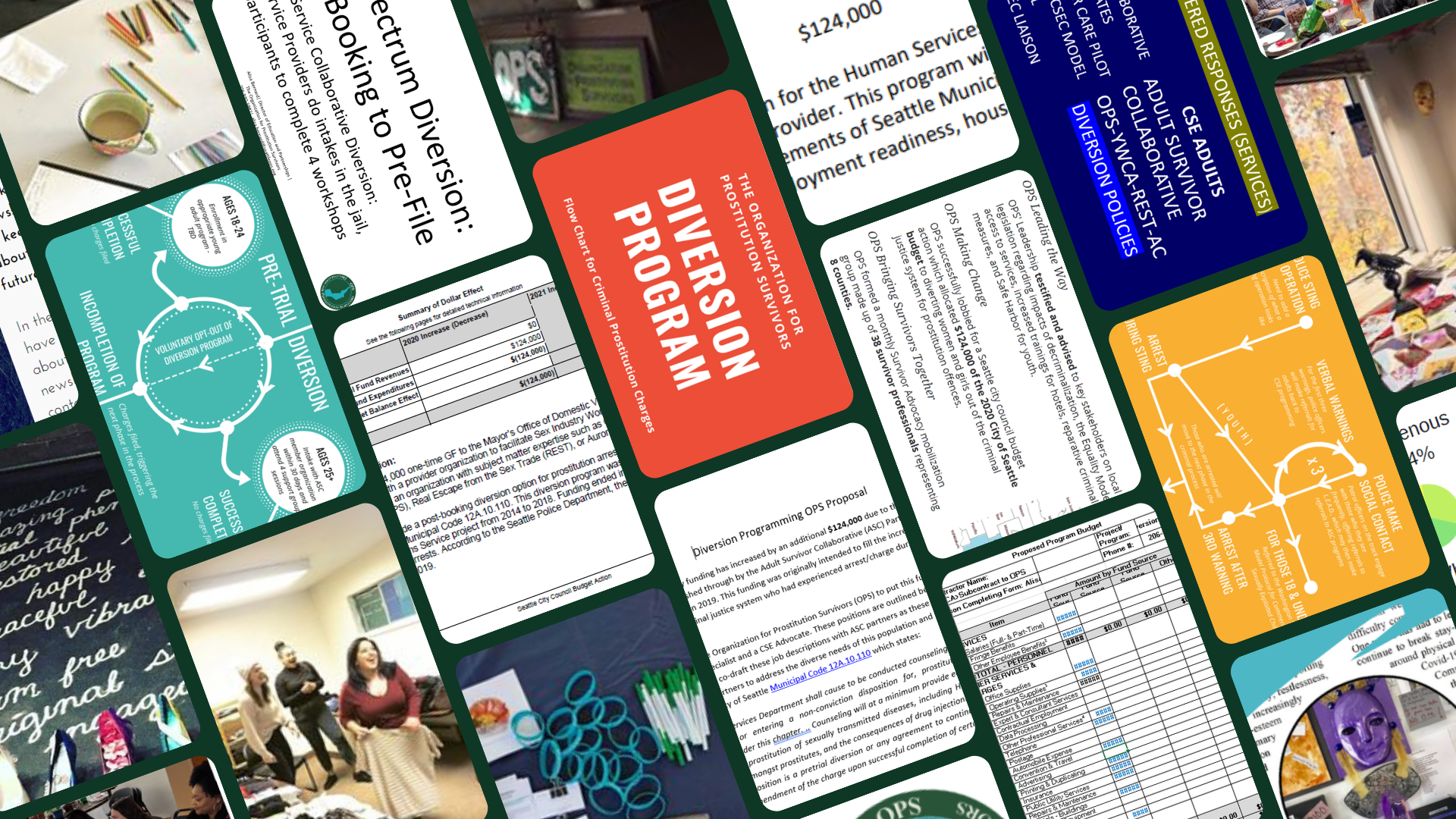
$124,000 City Appropriation Secured
Diversion Framework Redesigned
Citywide Stakeholder Coalition Built
Service-Based Alternative to Criminalization Created
Citywide Program Successfully Launched
Model Sustained for Multiple Years
Context & Challenge
Although Seattle Municipal Code provided a diversion pathway for individuals arrested for prostitution-related offenses, the existing model had become increasingly ineffective and underutilized. Diversion largely centered on participation in a single educational program, while many individuals were navigating complex challenges related to trauma, housing instability, substance use, poverty, and exploitation. The challenge was to create a more meaningful diversion model that aligned the intent of existing policy with the realities facing those most impacted while securing the support necessary for implementation.
Assessment & Strategic Opportunity
My assessment revealed that the primary barrier was the design of the diversion pathway. Existing approaches emphasized program completion rather than long-term stability and failed to account for the diverse needs of participants. The opportunity was to redesign diversion as a service-centered model that connected individuals to existing community resources while maintaining accountability within the legal framework.
Approach & Execution
I designed a survivor-centered diversion model that shifted the focus from participation in a single prescribed program to engagement with services tailored to an individual's specific needs and circumstances. The model leveraged existing community resources and created a coordinated pathway through which participants could access support from multiple service providers while satisfying diversion requirements.
To move the model from concept to implementation, I developed the diversion framework, drafted the city budget allocation, engaged stakeholders across the criminal justice and nonprofit sectors, and led advocacy efforts to secure public investment. This included direct engagement with prosecutors, judges, service providers, city officials, and community partners, as well as testimony, coalition-building, and coordinated advocacy efforts that ultimately secured funding for the program.
Stakeholder Alignment
Implementing the diversion model required alignment among prosecutors, judges, city officials, service providers, survivor advocates, and community organizations. Through direct outreach, coalition-building, testimony, and stakeholder engagement, I helped establish a shared understanding that meaningful diversion required access to services capable of addressing the factors contributing to continued system involvement. These efforts ultimately secured support from criminal justice partners, community organizations, and city leadership.
Results & Impact
The diversion model secured a dedicated $124,000 City of Seattle appropriation, restoring funding for survivor-centered diversion services and creating a sustainable pathway for implementation. The program successfully launched and remained operational for several years, transforming an ineffective diversion framework into a coordinated service model that expanded access to community-based support while reducing reliance on punitive responses.
Beyond the funding and implementation outcomes, the project demonstrated how policy, public investment, and cross-sector partnerships can be leveraged to redesign systems that are not achieving their intended purpose. By shifting diversion from a compliance-based model toward a service-centered approach, the initiative established a more practical and responsive pathway for individuals impacted by exploitation, poverty, trauma, and housing instability.