#SeeTheChild Campaign for NCMEC
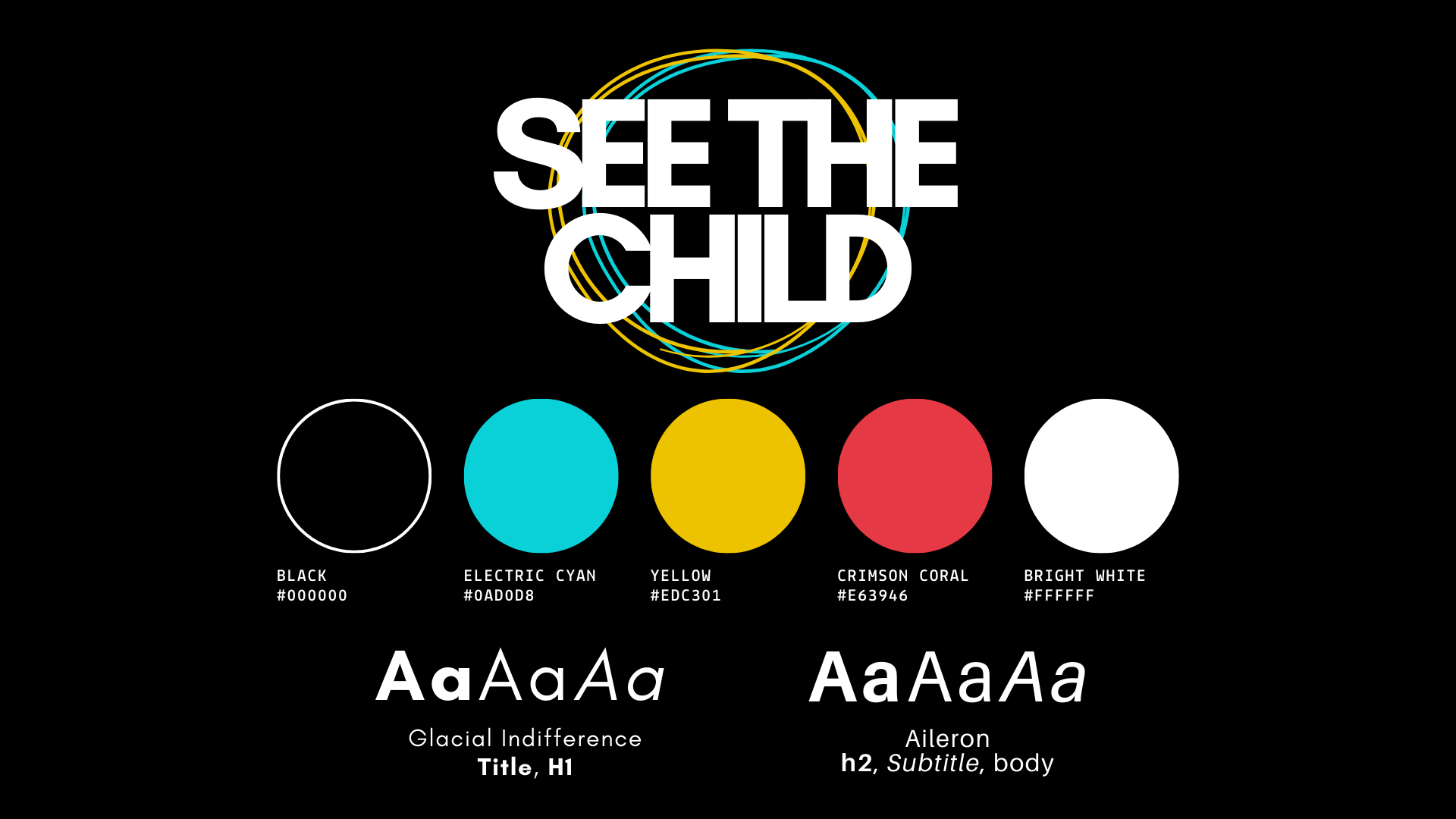
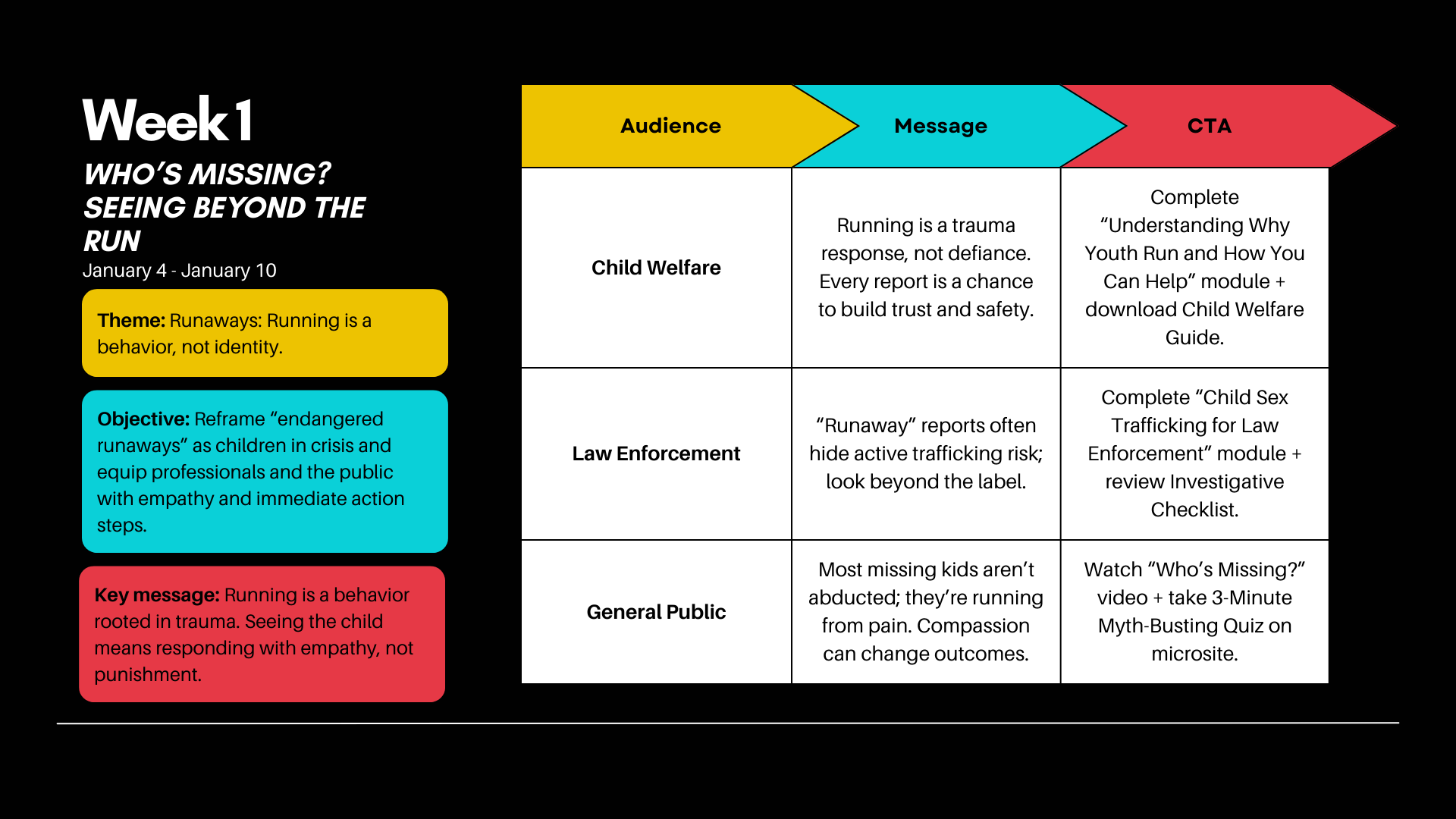
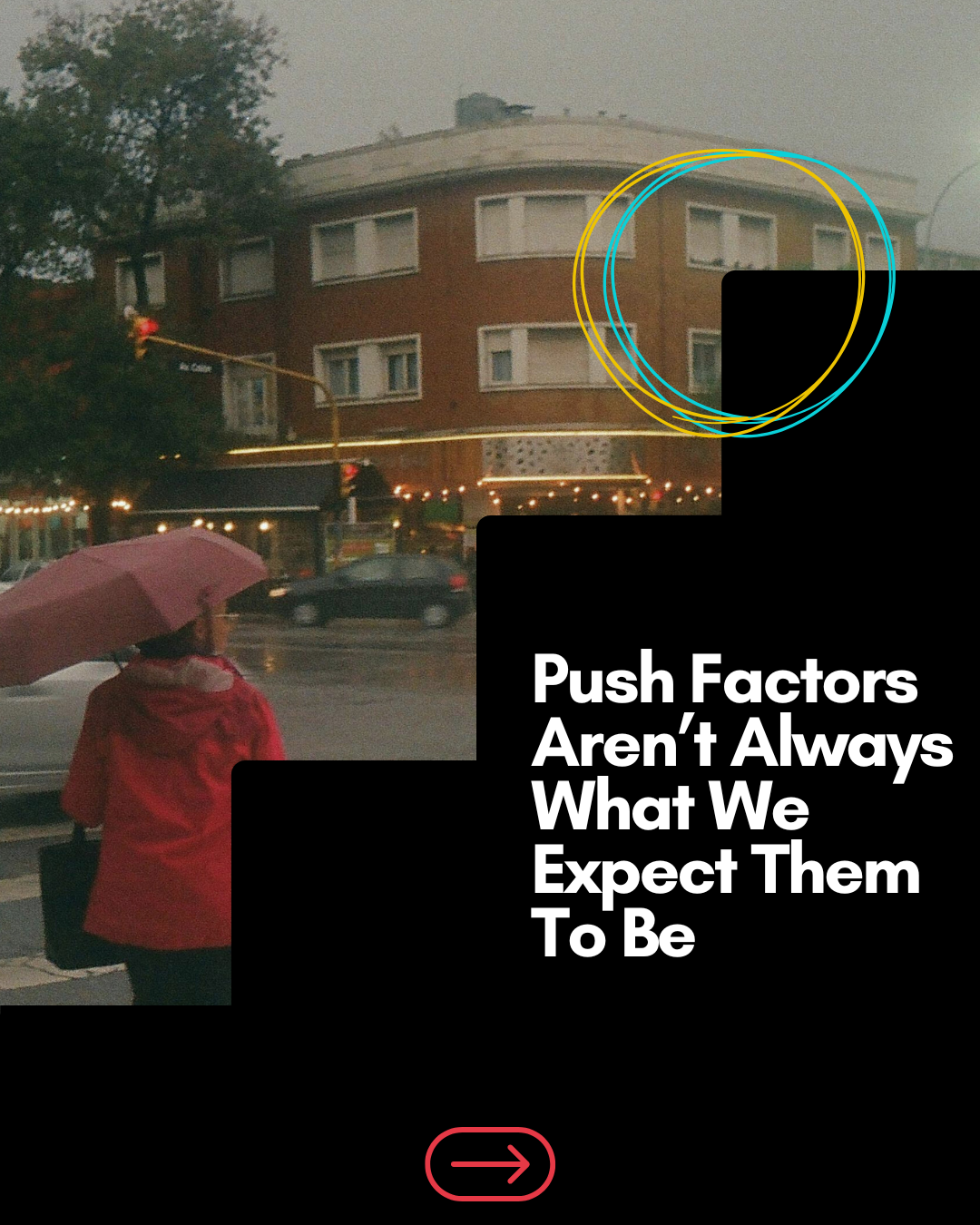
Human Trafficking Prevention and Awareness Month is generally a month with a low return on investment for the trafficking movement. The market is saturated with tired messaging, tropes and sensationalized imagery. I was tasked with coming up with a “dream” campaign with the two goals: 1) Showcase the vast increase in reports of child sex trafficking to the NCMEC; and, 2) increase people’s comfort in continuing to report child sex trafficking. Starting from the premise that “You don’t need the whole story to report” I developed the #SeeTheChild Campaign. A campaign focused on showcasing our successes through interactive case study storylines, while educating the public on reporting. The pitch included previous awareness month social metrics analysis, full campaign branding, target audience analysis, tactic outlines, sample social media posts, microsite wireframes, and merchandise mock ups as well as potential schedule, KPIs and Metrics.
While NCMEC chose a more traditional approach, this project showcased my ability to innovate, develop and strategically align a campaign toward increasing both reach and revenue.
Process
-
Develop an innovative sticky campaign for Human Trafficking Prevention and Awareness Month to highlight increase in reporting as well as encourage reporting by our target audiences.
-
In designing #SeeTheChild I worked to ensure the campaign would include both new and currently deployed elements as well as harnessing the power of sticky messaging that appealed to key target audiences motivations. Key steps included:
Analysis of previous years campaign: Doing an informal analysis of previous years campaigns I came to realize we relied heavily on reused and repurposed imagery and had yet to embrace new forms of social media interaction.
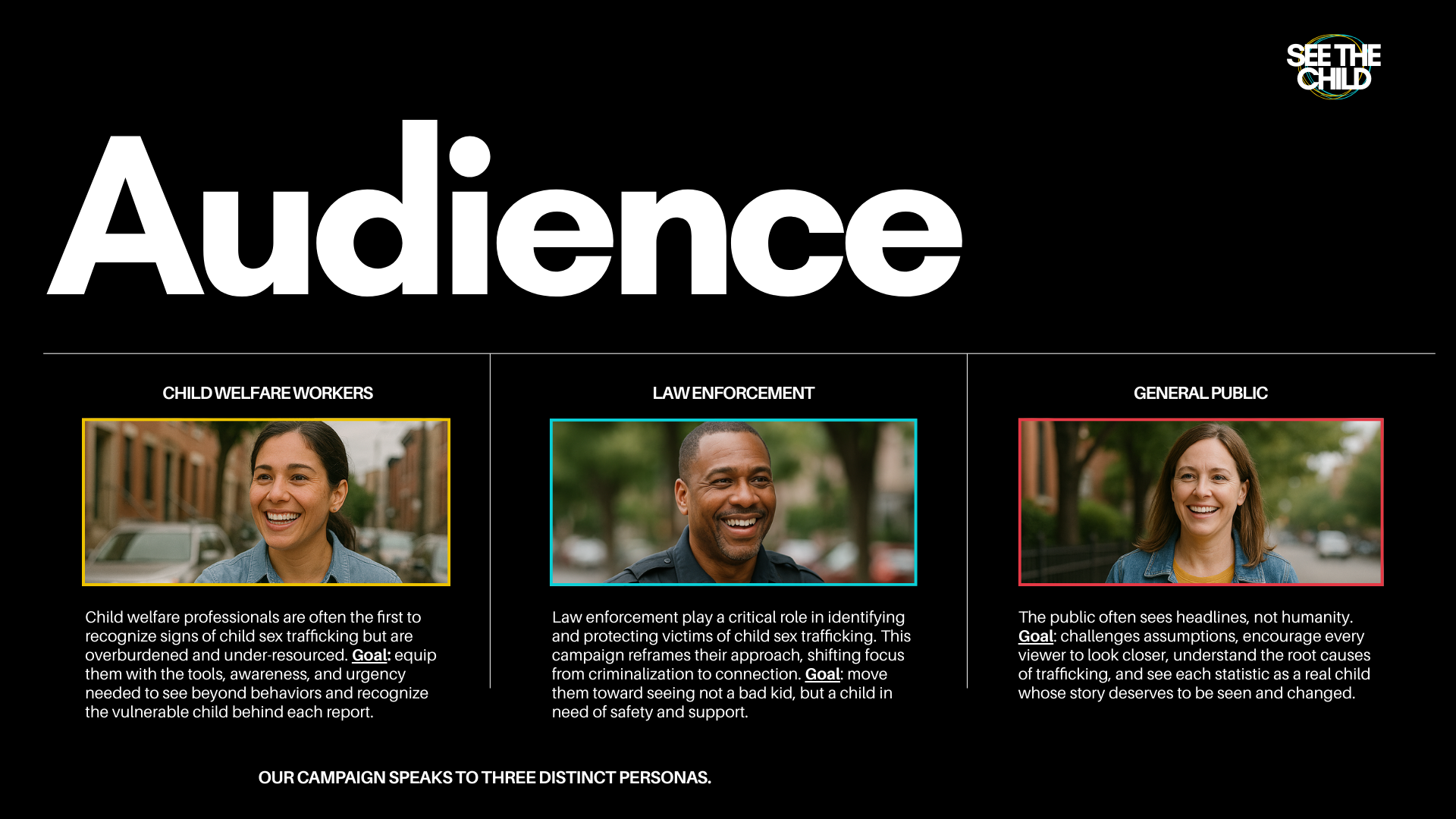
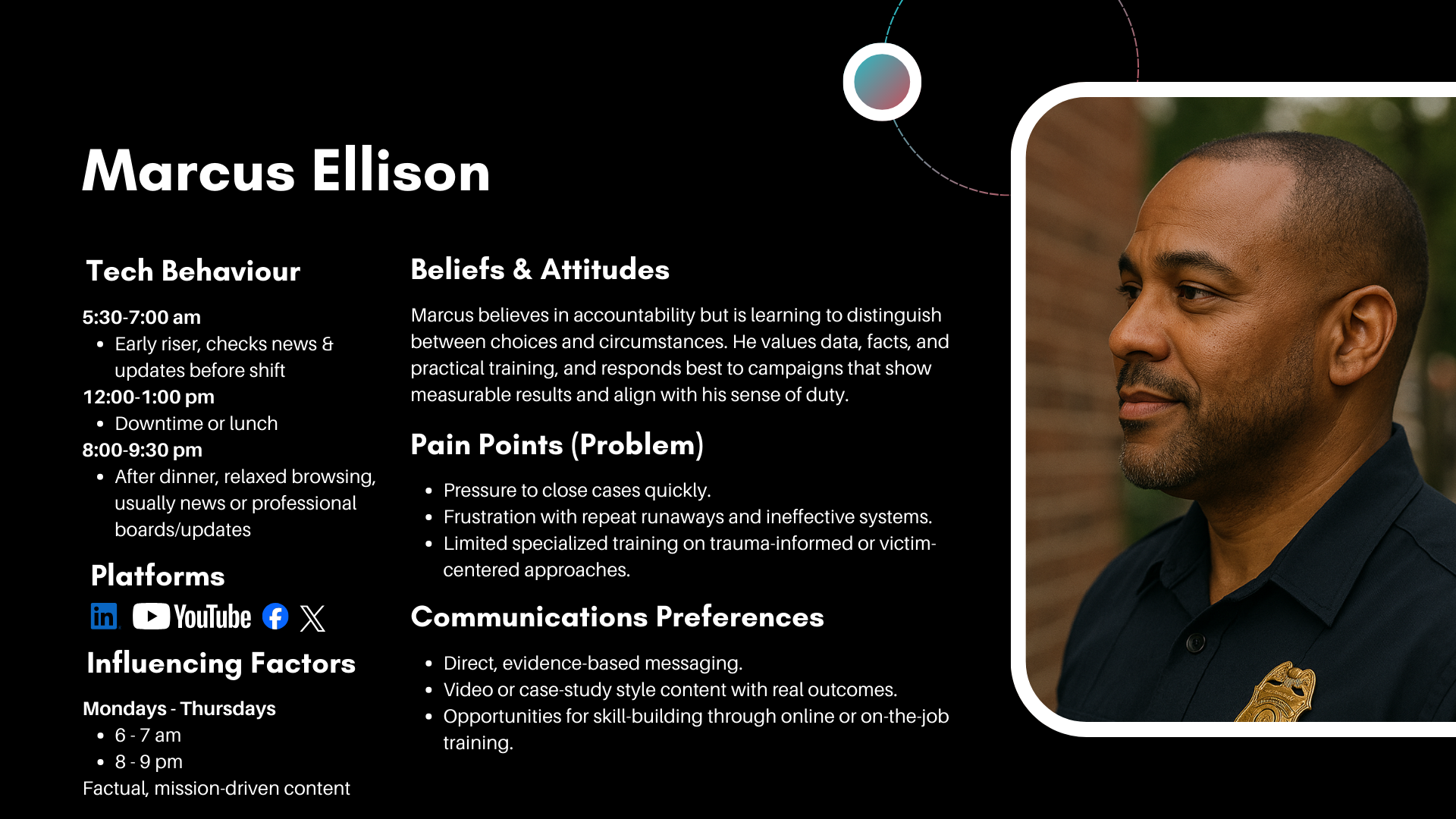
Identify target audiences: On reviewing our current target audiences I worked to understand their motivations as well as they key areas of influence and develop personas for each audience with appropriate CTAs.
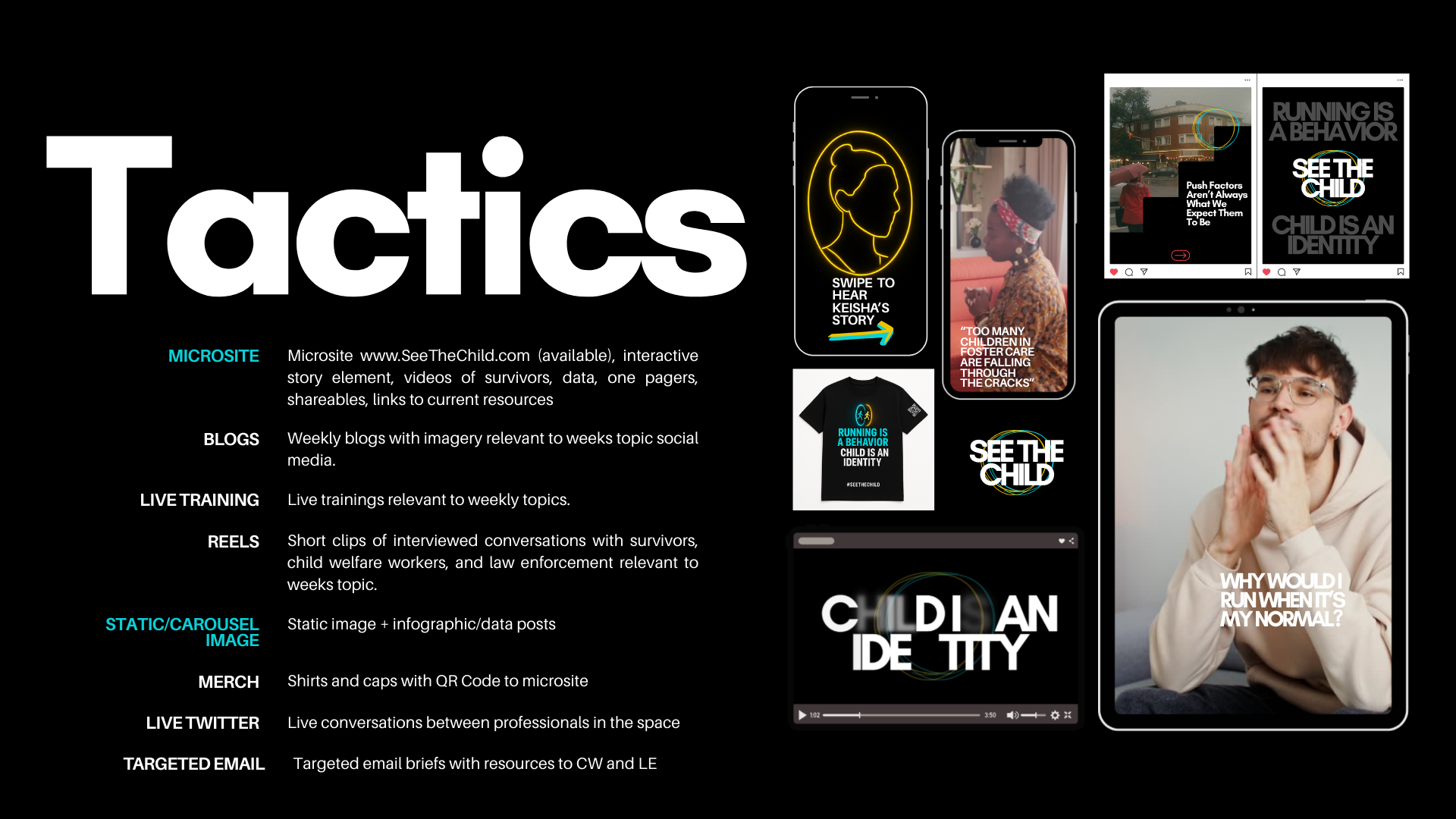
Tactics: Researching our current materials and resources I created a tactic map that allowed for an a la carte style selection process of key tactics which included low to high barrier and cost which engaged target audiences from multiple different entry points.
Scheduling and future thinking: Recognizing this campaign could be expanded past the initial awareness month I developed a strategy which used the initial month as a launching point to expand the campaign beyond a single month and included elements which could be further developed and deployed throughout the year.
KPIs & Metrics: Recognizing tracking success as an integral piece to this campaign I outlined appropriate and relevant KPI tracking and metric analysis frameworks to ensure we could adjust quickly if needed.
These strategies, allowed for a campaign that was both holistic and adaptable. While it is unfortunate it never launched, this strategy and approach showcased my ability to manage complex projects that could both raise awareness and reach.
-
Unfortunately, a more traditional approach was taken, however the presentation of this project did lead to new digital marketing tactics being adopted.
-
While no key metrics were tracked for this project, I identified KPIs which could be tracked through CTA fulfillment to determine effectiveness of each tactic.